
About the Grotto
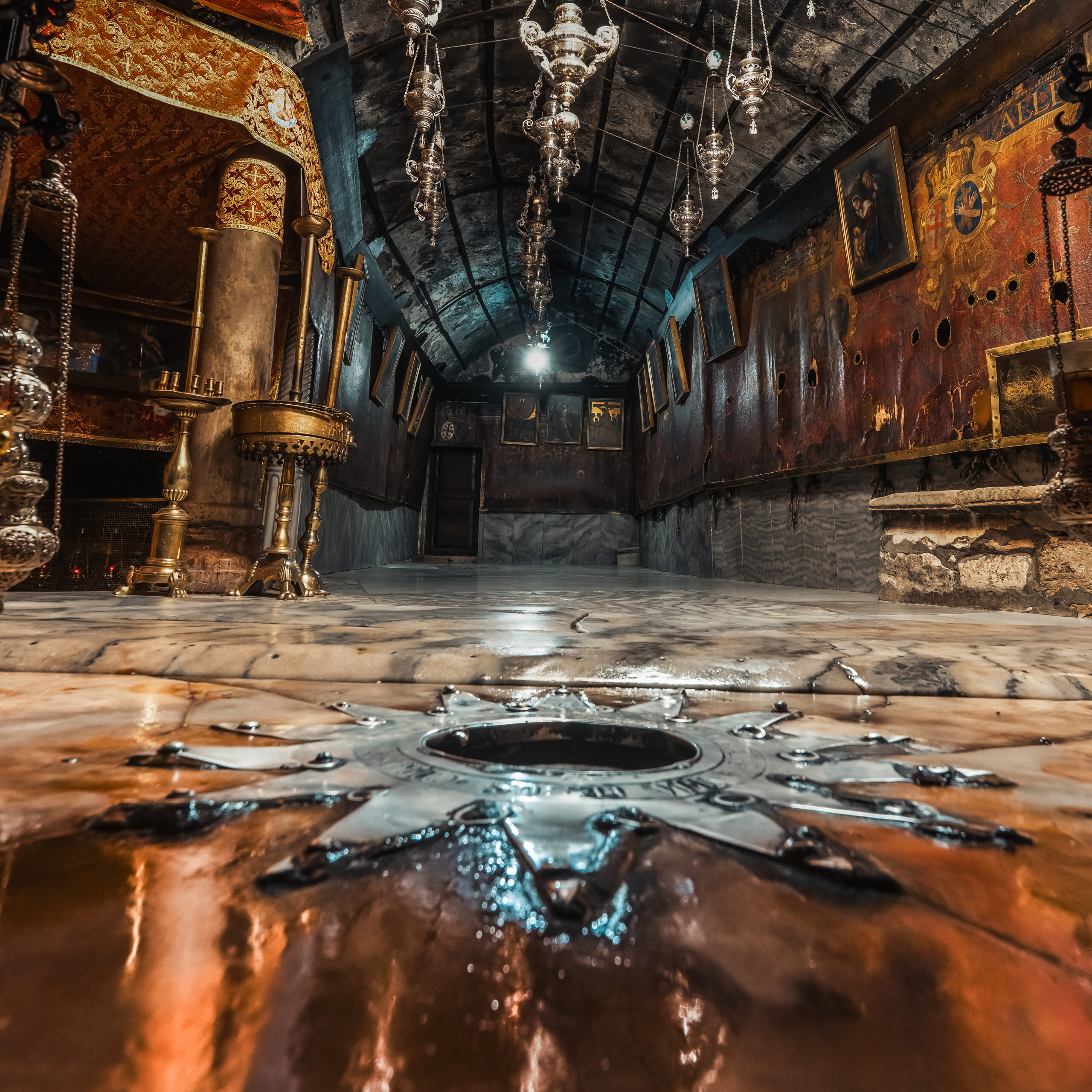
The Grotto of the Nativity, the spiritual epicenter of Bethlehem, remains one of the world's most sacred sites. Situated beneath the Church of the Nativity, it has been honored as the birthplace of Jesus Christ since at least the 2nd century, offering a profound space for prayer and reflection. The precise location of the Nativity is marked by a 14-pointed silver star set into a marble floor, bearing the Latin inscription: "Hic de Virgine Maria Jesus Christus natus est" (Here Jesus Christ was born to the Virgin Mary). Adjacent to the star lies the Altar of the Manger, where tradition holds that the Virgin Mary placed the infant Jesus.
The site’s history spans nearly two millennia of continuous worship and architectural evolution. During his 4th-century reign, Emperor Constantine constructed the first church over the cave and expanded the grotto to accommodate pilgrims. Following early Christian veneration, the first formal basilica was commissioned in the 4th century. This structure was later expanded and rebuilt in the 6th century by Emperor Justinian, whose marble and structural enhancements defined its Byzantine character. Later modifications during the Crusader era integrated Western artistic elements, reflecting the Grotto's evolving role in global pilgrimage
Today, a comprehensive restoration project is underway to preserve its historical, religious, and cultural value for future generations.
The restoration of the Grotto marks the essential final phase of the comprehensive project to preserve the Church of the Nativity, an ambitious undertaking that began in 2013. However, the restoration of the Church remains incomplete until this Grotto is fully restored.